What it is known for
MAC Stomper effects and experience
- Euphoric
- Relaxed
- Happy
Euphoric, relaxed and happy are recurring consumer descriptions. Producer accounts describe a similar combination of mental brightness and a more comfortable, settled body feeling.
Those qualities can coexist: relaxed does not necessarily mean immediately sleepy, and a mental lift does not necessarily mean stimulation. Reports also include dizziness and paranoia, which matter alongside the more appealing descriptions. The name is a starting point for understanding the strain’s reputation, not a prediction of an individual response.
Sources & notes
Producer descriptions and consumer reports
Producer accounts describe a mental lift and relaxation. Leafly reports include euphoria, relaxation and happiness, alongside unwanted experiences.
[4] Leafly: MAC Stomper consumer reports[1] VIBE: MAC Stomper producer profile[2] Theory Wellness: MAC Stomper profileUnwanted experiences
Reports also include paranoia, dizziness, dry eyes. Experiences vary by person and product.
Aroma, flavor and appearance
- Grape
- Citrus
- Orange
- Earthy
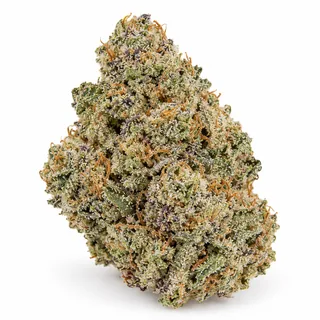
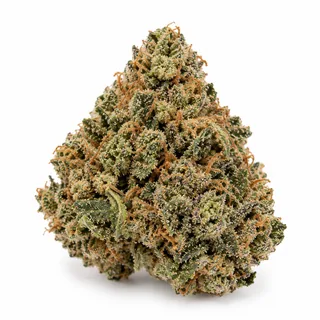
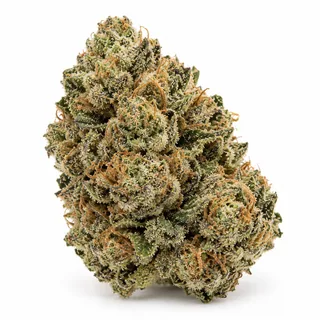
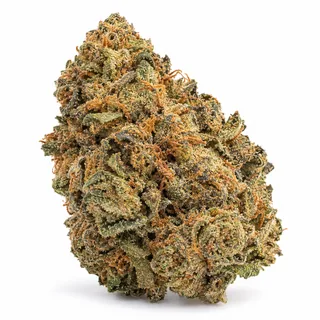
MAC Stomper combines grape sweetness with a brighter citrus edge. Orange gives the fruit a fresher character, while earth adds depth beneath it. The contrast between richer grape and sharper citrus is more useful than a simple sweet-fruit label.
Limonene is the leading individually reported terpene in the flower sample below, giving a measured point of comparison with those citrus descriptions. Its concentration does not describe the whole aroma: the grape and earthy character also matter when comparing how actual flower smells and tastes.
See cannabinoid and terpene information ↓
Sources & notes
Grape and citrus character
The two producer descriptions support the fruit and citrus profile. Their descriptions do not establish a shared batch chemistry.
[1] VIBE: MAC Stomper producer profile[2] Theory Wellness: MAC Stomper profileTHC & terpenes
MAC Stomper cannabinoids and terpenes
THC and terpene levels vary with phenotype, growing conditions, harvest, drying, storage and testing. The figures here describe specific samples or published descriptions, rather than a fixed recipe for MAC Stomper. Understanding the numbers.
A closer look at one flower sample
Mac Stomper Whole Flower 3.5g (S) 00316 · Nutmeg New Britain (report client)
Lab report dated August 1, 2025
- Total THC
- About 20.9%
- Total terpenes
- About 1.7%
Rounded totals for this sample. Expand the tables for the reported measurements.
Understanding this sample
What this terpene profile means
Limonene has a clear lead. This sample contains more than twice as much limonene as the next-largest reported terpene, caryophyllene. Alpha-pinene and linalool follow at lower concentrations.
Leading terpenes Reported concentration in flower
Open a terpene to explore its aroma and the research on effects.
Limonene0.75%Citrus
Citrus is a useful family reference; the d-limonene flavor reference describes orange and lemon notes. A flower’s fruit character also depends on compounds beyond limonene.
Could it change THC-related anxiety?
Early human research
A small controlled study found that added d-limonene reduced some anxiety-related effects of THC. This is an early finding under specific conditions, not evidence that limonene-rich flower is reliably calming or energizing.
Research context & sources
The study enrolled 20 adults; the strongest finding came from a higher-limonene condition completed by 12. It tested isolated vaporized compounds, not these flowers. This report names limonene without specifying its form.
Caryophyllene0.31%Form not specified
The report uses the general name “caryophyllene.” Beta-caryophyllene is associated with spice and wood, but this result does not explicitly identify that form.
Can we apply beta-caryophyllene research here?
Compound identity incomplete
The commonly discussed receptor research concerns beta-caryophyllene. We keep that distinction visible rather than assigning its findings to a lab result with an unspecified form.
Research context & sources
More precise identification from the laboratory would be needed before linking this measurement to research on a particular form. No predicted body effect is assigned.
Alpha-pinene0.14%Pine · cedarwood
Pine and cedarwood provide a familiar way to picture this compound’s sharp, woody character. The aroma reference is separate from claims about mental clarity.
Does it protect memory or improve clarity?
Human study: benefit not found
A controlled study in 19 adults did not find that added alpha-pinene prevented THC-related memory impairment or meaningfully changed the other acute effects measured. A pinene result should not be read as a promise of clearer thinking.
Research context & sources
The study tested isolated vaporized alpha-pinene with and without THC. Its result addresses the tested memory-protection claim; it does not prove that the compound has no possible biological effects.
Linalool0.12%Floral · lavender
Floral and lavender-like are useful reference points for this compound. They describe an aroma association, not a claim that the flower will smell exactly like lavender.
Could it contribute to relaxation?
Animal research
An inhalation study found reduced anxiety-like behavior in mice under some exposure conditions. This makes a calming role worth investigating, but does not show that the amount in this flower causes relaxation or sleepiness in people.
Research context & sources
Responses differed with exposure pattern and sex. The study also tested combinations with CBD; it did not test this flower or establish a human effect threshold.
0%1% of flower by mass
Bar length shows amount, not strength of aroma or effect. These measurements use dry flower weight. Other measured terpenes appear in the full table below.
Limonene: about 44% of the reported terpene total. This describes its share of the measured mixture, not its share of the experience.
How does that relate to the experience?
Relaxed, happy and euphoric are common descriptions of MAC Stomper. Its limonene lead does not automatically make this sample energizing, and the pinene result does not promise clearer thinking. The individual research notes explain which proposed effects have been tested.
Read the strain’s reported experiences ↑Make sense of the percentages
- Amount in the flower
- Limonene is reported at 0.75%, equivalent to 7.5 milligrams per gram of dry flower. This describes what is in the flower, not the amount a person absorbs.
- Share of the terpene total
- Dividing the 0.75% limonene result by the 1.7% reported terpene total gives about 44%. Both use the same measurement basis. This is a share of this report’s total, not a complete inventory of every possible aroma compound.
- Contribution to the experience
- A larger chemical share does not establish a larger effect. The research summaries explain what has been studied; none provides an effect score for this flower.
Why the chart cannot describe the whole aroma
The aroma notes are familiar references for the compounds, not a tasting report for this sample. Other volatile compounds also shape a flower’s smell, and a small amount of a potent odorant can matter more than a larger amount of another compound.
Sensory research on cannabis flower and extracts supports keeping aroma descriptions separate from a ranking by concentration.
View cannabinoid & terpene tables
Laboratory: Northeast Laboratories Inc.
About this sample and source
The report identifies Mac Stomper whole flower, product code 25-6-F2H3-MSWF and Biotrack ID 6640 7062 8596 2568. Nutmeg New Britain is the named client; a separate cultivator is not identified. The laboratory report ID is used as the sample reference because no separate sample ID is printed. Received July 28, 2025; individual analysis dates are not supplied. The strain label does not authenticate genetic provenance.
- Batch
- 25-6-F2H3-MSWF
- Sample
- 2598220-02 (laboratory report ID)
- Source checked
- September 25, 2026
Cannabinoids
Separate test date not supplied · 14 entries in the full panel
| Compound | Reported result |
|---|---|
| Total CannabinoidsLab-reported total | 25.25% |
| Total THCLab-reported total | 20.94% |
Totals include their component compounds. Do not add totals and individual results together.
| Compound | Reported result |
|---|---|
| CBGA | 1.43% |
| Δ9 THC | 0.43% |
| THCA | 23.39% |
View full cannabinoids panel (14 entries)
Includes non-detects and results below quantification. LOD is the detection limit; LOQ is the quantification limit. Limits retain the units used by the laboratory.
| Compound | Reported result |
|---|---|
| CBDV | Not reported |
| CBDA | Below quantification limit |
| CBGA | 1.43% |
| CBG | Below quantification limit |
| CBD | Not reported |
| THCV | Not reported |
| CBN | Not reported |
| Δ9 THC | 0.43% |
| Δ8 THC | Not reported |
| CBL | Not reported |
| THCA | 23.39% |
| CBC | Not reported |
| Total CannabinoidsLab-reported total | 25.25% |
| Total THCLab-reported total | 20.94% |
Test method and measurement notes
HPLC
All 12 listed cannabinoid rows and both totals are retained. Blank results remain unreported. CBDA and CBG are below LOQ, but the report does not provide numeric quantification limits. Total THC is the report’s calculated result using THC + 0.877 × THCA.
Terpenes
Separate test date not supplied · 16 entries in the full panel
| Compound | Reported result |
|---|---|
| Total TerpenesLab-reported total | 1.70% |
Totals include their component compounds. Do not add totals and individual results together.
| Compound | Reported result |
|---|---|
| α-Pinene | 0.14% |
| Camphene | 0.03% |
| β-Myrcene | 0.05% |
| β-Pinene | 0.11% |
| Limonene | 0.75% |
| α-Terpinolene | 0.01% |
| Linalool | 0.12% |
| Caryophyllene | 0.31% |
| α-Humulene | 0.08% |
| Ocimene (total) | 0.08% |
| Nerolidol (total) | 0.02% |
View full terpenes panel (16 entries)
Includes non-detects and results below quantification. LOD is the detection limit; LOQ is the quantification limit. Limits retain the units used by the laboratory.
| Compound | Reported result |
|---|---|
| α-Pinene | 0.14% |
| Camphene | 0.03% |
| β-Myrcene | 0.05% |
| β-Pinene | 0.11% |
| δ-3-Carene | Not reported |
| Limonene | 0.75% |
| p-Cymene | Not reported |
| α-Terpinolene | 0.01% |
| Linalool | 0.12% |
| Caryophyllene | 0.31% |
| α-Humulene | 0.08% |
| α-Bisabolol | Not reported |
| Terpinene (total) | Not reported |
| Ocimene (total) | 0.08% |
| Nerolidol (total) | 0.02% |
| Total TerpenesLab-reported total | 1.70% |
Test method and measurement notes
GC-MS
All 15 listed terpene rows and the total are retained. Blank cells are not reported results, not confirmed zeros. Alpha-terpinolene, unqualified caryophyllene and grouped total names preserve the report’s labels.
Results transcribed from a publicly hosted report; Flower & Freedom did not perform this test. ND means not detected above the laboratory’s detection limit. Below LOQ means below its quantification limit. Neither means a proven zero. Missing results are not treated as zero.
Sources & notes
One original report checked
The report lists 14 cannabinoid entries including totals and 16 terpene entries including the total. Blank cells remain unreported; below-LOQ results retain that status. Both panels use dry-weight percentages.
[5] Northeast Laboratories: Mac Stomper, report 2598220-02The story behind the strain
Genetics and history
Reported parentage · accounts or versions differ
MAC Stomper is a Capulator hybrid described as MAC 1 × Grape Stomper OG. Its character centers on grape and citrus aromas with an earthy undertone, alongside reports of relaxation and a pleasant mental lift.
It is a separate strain from MAC or MAC 1. The added Grape Stomper OG parent is part of its published identity, so descriptions and lab results for the other MAC names should not simply be carried across.
Sources & notes
Producer-attributed pedigree
Both producers name MAC 1 × Grape Stomper OG and Capulator. The laboratory report supplies product identity only.
[1] VIBE: MAC Stomper producer profile[2] Theory Wellness: MAC Stomper profileFor growers
Growing MAC Stomper
Published characteristics for the named versions below. Flowering time excludes the earlier growth period; seed-to-harvest estimates cover the full cycle.
Capulator MAC Stomper (archived description)
- Flowering time
- 7–9 weeks
- Starting material
- Regular seeds
The archived Capulator release is described as regular seed with a 7–9-week flowering period. Regular seed identifies a seed format that can produce male and female plants; it does not mean that every plant has identical traits.
A commercial flower producer may work with a particular selection from that broader line. That helps explain why a producer’s MAC Stomper can have a recognizable presentation without defining every seed-grown example.
The published material supports the named cross more clearly than a universal height or yield specification. For this guide, the release description stays separate from the Northeast Laboratories results in the cannabinoid and terpene section. Those measurements document one product received in July 2025 and reported in August, rather than the expected chemistry of future plants.
Compare plant and seed identities
| Published parents | MAC 1 × Grape Stomper OG |
|---|---|
| Archived seed release | Capulator regular seeds |
| Archived flowering description | 7–9 weeks for the named release |
Sources & notes
Archived release description
SeedFinder records a regular seed release and 7–9-week flowering description. Height, yield and cultivation difficulty are not filled from unrelated MAC lines.
[3] SeedFinder: Capulator release descriptionMAC Stomper seed availability
Listings are not a live stock check. We may earn a commission if you buy through these links, at no extra cost to you. About affiliate links
MAC Stomper questions
What are MAC Stomper’s parents?
VIBE and Theory Wellness describe it as MAC 1 × Grape Stomper OG and attribute the cross to Capulator.
Is MAC Stomper the same as MAC or MAC 1?
No. MAC Stomper is a separate cross with Grape Stomper OG in its published parentage. A shared MAC name does not make the products interchangeable.
What does MAC Stomper smell like?
Grape and bright citrus are recurring descriptions, with orange and earthy notes in producer accounts.
What was the THC level of the tested MAC Stomper sample?
The August 2025 Northeast Laboratories report recorded 20.94% total THC on a dry-weight basis. That figure describes its identified flower product, not every MAC Stomper batch.
Which terpene was highest in that sample?
Limonene was the largest individual terpene result at 0.75% dry weight. The report’s full panel is available below; another producer’s flower may differ.
Does MAC Stomper’s limonene level mean it is energizing?
No. Limonene leads this sample’s measured terpene profile, but that is not an energy score. A small human study investigated d-limonene and THC-related anxiety; it did not establish that limonene-rich flower is stimulating or reliably calming.
From the community
Your experience with MAC Stomper
What stood out about the flower or the plant? Share your own experience to help other readers compare.
Member ratings and comments are being prepared. Google sign-in will open when accounts are connected.
Sign in to rate or comment. Your email stays private.
Leave a comment
Your submissions
Community comments
No comments yet. Share the first experience.
Member experiences are personal accounts and are separate from our researched strain guide. How we handle community information.
Behind the guide
Sources and further reading
Written by Flower & Freedom, using the references below to explain this strain’s character, history and available data. Our editorial approach.
Spotted a missing detail or a mistake? Share what you know and a source.
- VIBE: MAC Stomper producer profile
- Theory Wellness: MAC Stomper profile
- SeedFinder: Capulator release description
- Leafly: MAC Stomper consumer reports
- Northeast Laboratories: Mac Stomper, report 2598220-02
- FEMA flavor reference
- Controlled d-limonene and THC study in adults (2024)
- FEMA flavor reference
- Beta-caryophyllene receptor and mouse study (2008)
- FEMA flavor reference
- Controlled alpha-pinene and THC study in adults (2025)
- FEMA flavor reference
- Linalool and beta-myrcene inhalation study in mice (2024)
- Cannabis aroma and odor impact study (2015)
- Minor aroma compounds in cannabis extracts (2023)
Educational information for adults. Reported effects vary by person and product and are not medical advice. Growing figures are descriptions, not yield or harvest guarantees.